
Spread a little love (and laughter) in the security world. Download free, not-at-all-creepy Valentine’s Day cards made just for security...


ISC West 2026 is coming up on March 23-27th at The Venetian Expo in Las Vegas. With over 700 exhibitors, let me tell you, if you walk in to that exhibit hall without a plan, you will absolutely lose three hours to free pens, lukewarm coffee, and a demo you didn’t need.
So instead of letting conference swallow you whole, here’s a skimmable, problem-first guide to a few things worth seeing this year.
A little context first…
ISC West feels different this year. Not in the “new buzzword” way.
The industry itself is shifting, and if you understand what is changing you will have a much easier time deciding where to spend your time on the floor.
You have probably felt it already.
AI is everywhere, but very few conversations include actionable governance.
Cloud adoption keeps increasing, yet most real deployments are still hybrid and messy.
Privacy regulations now reach far beyond the EU.
Video evidence faces heavier scrutiny in legal cases.
At the same time, expectations for system reliability and management keep rising.
This is the backdrop for ISC West this year.
Every vendor will be talking about AI.
Every booth will have something “cloud-enabled.”
And you’ll hear the phrase next generation roughly 400 times.
That’s why the Milestone booth (#18053) is worth spending some real time in.
Not because we want to sell you on it.
Because it’s basically a working snapshot of where the industry is heading.
Instead of showing one company’s vision, it shows an ecosystem tackling the biggest shifts happening in video security right now.
Each partner in the booth addresses a different challenge the industry is dealing with. Storage, AI governance, privacy rules, video authenticity, system management. All working inside the same platform.
If you want to understand where things are going, it’s one of the few places on the show floor where you can actually see the whole picture.
XProtect is a video management platform designed around one big idea: openness.
Instead of locking you into a single vendor’s ecosystem, it allows thousands of cameras, analytics tools, storage systems, and other applications to plug into the same environment. That flexibility is the reason the Milestone booth includes so many different technology partners.
Every partner you’ll see there is building on top of that platform.
Video systems rarely stay simple and one business’s needs can be entirely different from another depending on what their industry, climate, and goals are.
The system you deploy today might eventually need:
A closed system forces you to replace everything when needs change or wait on an update that may never come.
An open platform lets the system evolve over time.
Before getting into analytics and AI, it helps to look at the foundation.
Cameras, servers, and infrastructure.
Inside the Milestone booth you’ll see hardware from:
And yes, they all have their own booths if you want the full deep dive.
But what’s interesting here is seeing how the hardware behaves inside the Milestone ecosystem, not just on a spec sheet.
In a real deployment, nothing works alone.
Your cameras need to talk to your VMS.
Your VMS needs to work with your storage architecture.
Your analytics tools need reliable video streams to function properly.
Seeing these systems operate together inside a working environment is a lot more useful than hearing each one describe their piece separately.
( Hi! That’s us!)
Let’s talk about one of the most painfully relatable problems security administrators face on a regular basis.
Someone asks for footage from last Tuesday.
You pull up the camera… and realize it hasn’t been recording for two weeks.
Nobody knew.
No alert fired.
Or maybe alerts fired alongside thousands of others and got lost in the abyss.
That “uh oh” moment is exactly why The Boring Toolbox exists.
It’s a management and health monitoring layer built specifically for Milestone environments.
Instead of treating system health like an afterthought, it gives administrators real visibility into what’s actually happening across their cameras, storage, and recording servers.
At ISC West we’ll be showing:
The goal is simple:
If you manage hundreds (or thousands) of cameras, this is the operational side of the industry that rarely gets attention at trade shows but determines whether your system actually works when it matters.
Cloud migration sounds great in theory.
In practice, most security environments are stuck somewhere in the middle.
Some sites have great connectivity.
Others barely stay online.
Compliance rules might require local storage.
And IT budgets are always shifting.
Arcules sits right in that messy middle.
It’s a cam-to-cloud platform that lets organizations start moving video workloads into the cloud without ripping out their existing infrastructure.
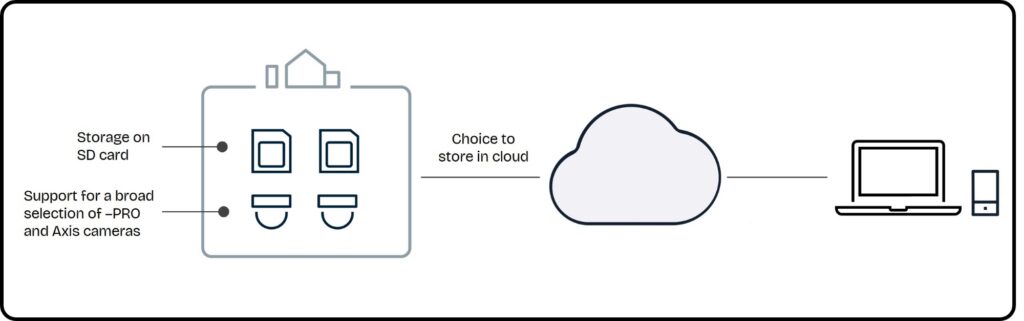
You can centralize management across distributed locations, reduce on-prem hardware, and scale more easily while still keeping the flexibility to run hybrid environments.
If you’re managing dozens of locations and trying to balance cost, reliability, and infrastructure constraints, this is one of the more practical cloud conversations happening at the show.
It’s the newsletter security professionals use to work smarter. We promise you’ll learn stuff and enjoy a few blissful moments of productive procrastination.
For years the legal standard around video evidence was simple: If someone wanted to claim footage was fake, they had to prove it.
That standard is changing.
Courts and insurance companies are starting to ask a different question:
Can you prove this video is real?
That’s a much harder problem. And most VMS environments aren’t equipped to answer it.
SWEAR tackles that issue by generating a cryptographic fingerprint at the moment the video is recorded. That fingerprint can later be verified to confirm the footage hasn’t been altered.
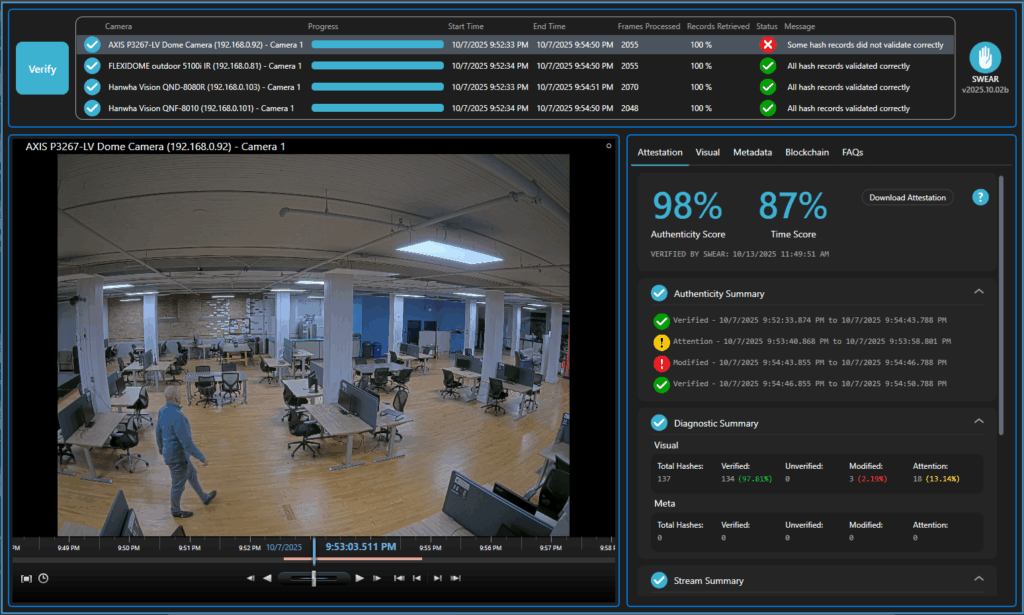
As AI and deepfakes become more advanced, verifying the authenticity of surveillance video will only become more important. Because SWEAR’s technology creates an independent chain of custody, it helps ensure your video remains a credible source of evidence.
Tiger Surveillance focuses on two things every security professional eventually has to deal with: storage that keeps growing and recording and management servers that sometimes fail at the worst possible moment.
Surveillance Bridge manages long-term storage. Instead of constantly adding more local drives, it extends your XProtect storage into cloud object storage like AWS, Azure, Google Cloud, or Wasabi. Older footage automatically moves to cheaper storage tiers as your local disks fill up.
From the XProtect side, nothing changes. The system still treats the footage like it lives on a local drive, and playback works the same way even when the video is sitting in the cloud.
This is especially useful for systems with long retention requirements where buying more on-prem storage every year starts getting expensive.
Their second product, Surveillance HA, handles server failures. If the primary recording or management server goes down, a secondary server takes over immediately so cameras keep recording without losing frames. Live feeds and previous recordings stay available during the transition.
If your system has strict retention requirements or uptime matters enough that a server failure would cause real problems, Tiger is worth a stop. You will see practical tools for two parts of video infrastructure that usually only get attention after something breaks.
Privacy laws are expanding quickly and far beyond Europe.
Between GDPR, CCPA, and emerging privacy laws across the U.S. and elsewhere, the rules around identifiable video data are getting stricter every year.
Which creates a challenge.
Video analytics and AI models rely on large amounts of visual data.
But privacy laws restrict how that data can be used.
Brighter AI solves that problem by anonymizing faces and license plates in images and video while preserving the surrounding scene context.
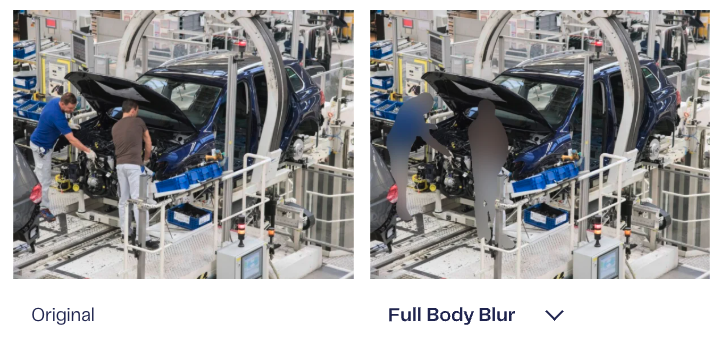
The result is footage that can still be used for analytics and machine learning without exposing identifiable individuals.
For organizations investing in AI-driven video analytics, this is becoming an increasingly important piece of the puzzle.
Everyone wants AI.
Very few organizations have a real plan for governing it.
Buying an AI tool is easy. Managing the data, training process, and oversight around it is more complicated.
Centific focuses on that part of the process. The company helps organizations build and manage AI systems using structured data pipelines, controlled training datasets, and human oversight.
If your organization is moving beyond experimentation and starting to deploy AI in production environments, this is the kind of infrastructure that keeps things from going sideways later.
If your goal at ISC West is to solve a specific problem, the Milestone booth gives you a concentrated look at some of the biggest changes happening in the industry:
And more importantly, it shows how those pieces fit together.
These aren’t concept demos or roadmap slides.
They’re working solutions responding to problems security teams are already dealing with today.
Before you land in Vegas, write down:
Then use this list to find the booths that help you solve them.
We’ll be inside the Milestone booth (#18053) if you want to talk about uptime, analytics, or why AI should make your life easier and not harder.
➜ Download ISC West 2026 Exhibit Hall Map
See you in Vegas.

Your go-to XProtect eXPerts. We learn the technical stuff that will save you time and make it less boring.
Spread a little love (and laughter) in the security world. Download free, not-at-all-creepy Valentine’s Day cards made just for security...

This blog introduces Analytics, a new feature in The Boring Toolbox that brings powerful trend visualization to Milestone XProtect. Learn...
Zipstream can dramatically reduce storage and bandwidth in Milestone, but only if it’s enabled correctly. This guide breaks down how...